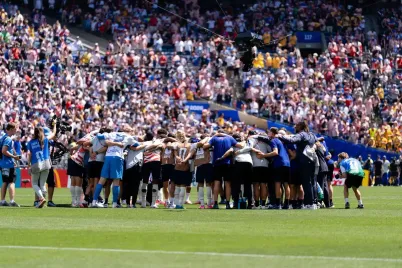

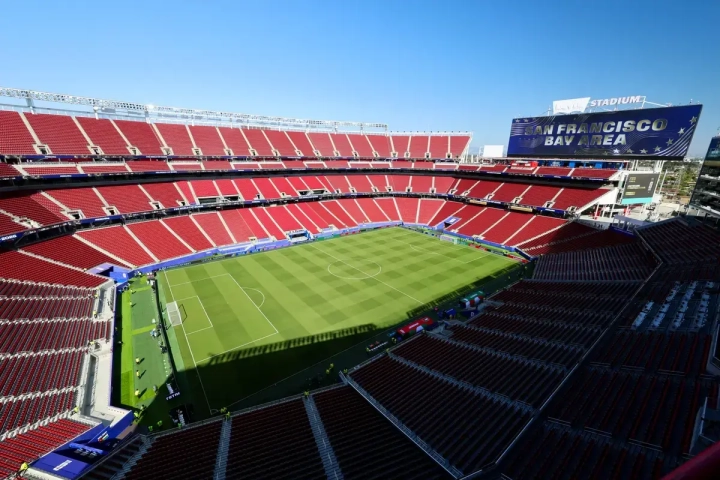
The race for a place in the knockout rounds of the 2026 FIFA World Cup reaches a pivotal moment when Paraguay and Australia meet in their final Group D fixture at the San Francisco Bay Area Stadium in Santa Clara, California. Scheduled for Thursday, 25 June 2026, with kick-off at 7pm local time (3am UK Time), the contest carries enormous significance for both nations as the group phase approaches its conclusion.
With the United States already having secured top spot in Group D and Turkey eliminated, attention now turns to the battle for progression behind the hosts. Australia enter the match in the stronger position, knowing that a draw would be enough to secure advancement to the Round of 32. Paraguay, meanwhile, arrive with momentum after reviving their campaign and remain firmly in contention to extend their stay in the tournament.
The fixture represents one of the most intriguing stories of the group stage. Neither side was widely discussed among the pre-tournament favourites, yet both have given themselves a genuine opportunity to progress. For Australia, qualification would continue the encouraging trajectory established under head coach Tony Popovic. For Paraguay, it would mark another chapter in a remarkable resurgence engineered by Gustavo Alfaro since his appointment in 2024.
Few expected Group D to unfold in such dramatic fashion. Australia opened their campaign impressively with a 2-0 victory over Turkey, a result that immediately strengthened their hopes of reaching the knockout phase. That success was followed by a 2-0 defeat against the United States, leaving the Socceroos needing one final positive result to complete the job.
Despite the setback against the hosts, there remains a sense of confidence within the Australian camp. The performance against Turkey demonstrated the balance Popovic has sought to establish since taking charge. Defensive organisation, physical intensity and disciplined pressing have become hallmarks of his approach, while the team has also shown greater attacking ambition than in previous tournament cycles.
Australia’s recent form reflects a side that has developed increasing resilience. Qualification for the World Cup was secured through a series of disciplined displays, and that same mentality has been evident on the biggest stage. Even in defeat against the United States, the Socceroos remained competitive for long periods before being punished by a highly efficient opponent.
Several players have emerged as influential figures during the campaign. Captain Jackson Irvine continues to provide leadership and energy in midfield, while Aiden O’Neill’s ability to shield the defence and dictate tempo has given Australia a solid platform. At the back, Harry Souttar remains a towering presence whose aerial dominance is crucial in both penalty areas.
Further forward, the pace and unpredictability available to Popovic have become increasingly important. Nestory Irankunda has generated considerable attention throughout the tournament and remains one of Australia’s most exciting attacking options. Cristian Volpato and Connor Metcalfe have also been involved in discussions surrounding team selection, providing the coaching staff with valuable alternatives as they prepare for a decisive encounter.
There is, however, one confirmed fitness concern for Australia. Experienced winger Mat Leckie has been ruled out with a hamstring injury, depriving the side of a player whose tournament experience and versatility have often proved valuable in major competitions. Beyond that absence, the focus has largely centred on selection decisions rather than widespread availability problems.
Tactically, Australia are unlikely to abandon the principles that have carried them to this position. Popovic has frequently favoured a structured shape designed to minimise space between the lines while creating opportunities to transition quickly when possession is regained. Set pieces remain an important weapon, particularly given the aerial strengths of players such as Souttar and Irvine.
Managing the emotional dimension of the occasion will be equally important. Australia know that a draw is enough, but there has been little indication from within the camp that the team intends to approach the match cautiously. Players and coaching staff have consistently stressed the importance of maintaining an attacking mindset rather than attempting to protect a result from the opening whistle.
Standing in their way is a Paraguay side that has already demonstrated its ability to respond under pressure. Their World Cup campaign began in difficult fashion with a heavy defeat against the United States. A 4-1 loss raised questions about whether the South Americans could recover in time to remain competitive within the group.
The response was emphatic. Paraguay followed that disappointment with a hard-fought 1-0 victory over Turkey, a result that transformed the complexion of Group D and restored belief throughout the squad. The win showcased many of the characteristics that have become associated with Alfaro’s team: determination, defensive discipline and an ability to remain competitive even in adverse circumstances.
The victory over Turkey was particularly notable because it required Paraguay to display immense resilience. An early goal from Matias Galarza proved decisive, but the team also had to cope with a numerical disadvantage after Miguel Almiron was sent off. Their ability to preserve the lead under sustained pressure illustrated the fighting spirit that Alfaro has repeatedly praised since taking charge.
Paraguay’s journey to this World Cup has been one of the tournament’s more compelling narratives. Having missed the previous three editions, La Albirroja returned to football’s biggest stage after a dramatic turnaround in fortunes during South American qualifying. Alfaro inherited a side struggling near the bottom of the standings and guided them to qualification through a blend of tactical organisation and psychological belief.
Defensive solidity has been central to that transformation. Captain Gustavo Gomez remains the cornerstone of the back line, providing leadership, physicality and experience. Alongside him, Omar Alderete has become another key figure in a defensive unit that helped Paraguay rediscover its competitive identity.
Midfield responsibility is often shared by players capable of combining work rate with technical quality. Diego Gomez has developed into one of Paraguay’s most influential performers, while Julio Enciso offers creativity and the ability to unlock defences in tight spaces. Antonio Sanabria provides a focal point in attack and remains an important source of goals.
One confirmed selection issue concerns Almiron. The experienced attacker was sent off during the victory over Turkey and is suspended for the meeting with Australia. His absence removes a player capable of changing matches through his pace, movement and direct running. It also places greater responsibility on Paraguay’s remaining attacking options to provide the necessary spark.
Beyond that suspension, the emphasis is likely to remain on collective organisation rather than individual brilliance. Alfaro has repeatedly spoken about the importance of team spirit and sacrifice, and those qualities have become defining characteristics of his tenure. Paraguay may not possess the depth of some traditional football powers, but they have consistently demonstrated a willingness to compete for every ball and remain difficult to break down.
The tactical battle promises to be fascinating. Paraguay are comfortable defending in compact shapes and forcing opponents into wide areas, while Australia prefer to use quick transitions and physical intensity to create openings. Both sides are strong in aerial situations, suggesting that dead-ball scenarios could play a significant role in determining the outcome.
Control of midfield could prove especially decisive. Irvine and O’Neill will attempt to establish authority for Australia, while Paraguay’s central players seek to disrupt rhythm and launch counter-attacks. Winning second balls, maintaining discipline and avoiding costly mistakes are likely to be recurring themes throughout the evening.
Historical context adds another layer of intrigue. Meetings between the two nations have been rare, with only a handful of previous encounters recorded. Australia defeated Paraguay 1-0 in a friendly in 2010, while an earlier meeting in 2006 ended in a draw. Neither result carries significant relevance to the present, but they underline how uncommon this fixture has been on the international stage.
For Paraguay, the occasion also carries symbolic importance. The nation reached the quarter-finals of the World Cup in South Africa in 2010, producing the finest tournament run in its history. The current generation is attempting to create its own legacy after years away from the competition. Progression to the knockout rounds would represent another significant milestone in that rebuilding process.
Australia, meanwhile, are seeking to continue a period of sustained World Cup competitiveness. The Socceroos reached the Round of 16 in 2022 and have become increasingly accustomed to navigating difficult tournament situations. Advancing again would reinforce their status as one of Asia’s most consistent representatives on the global stage.
Several broader storylines also converge around the match. The expanded 48-team World Cup has created fresh opportunities for nations outside the traditional elite, and both Paraguay and Australia have embraced that opportunity. Their presence in a meaningful final group match reflects the growing depth of international football and the increasingly competitive nature of the tournament.
Support from home has been another notable feature. In Australia, interest in the Socceroos has surged as qualification has come within reach. Paraguay’s supporters have similarly rallied behind a team whose revival under Alfaro has captured national attention. The atmosphere in Santa Clara is expected to reflect the significance of the occasion, with both sets of fans aware that a place in the knockout rounds may be at stake.
As kick-off approaches, the margins appear exceptionally fine. Australia possess the advantage of knowing a draw would be sufficient, but that reality also brings its own pressures. Paraguay, forced to chase a positive result, may benefit from greater clarity regarding their approach. Neither side can afford lapses in concentration, and every duel, set piece and transition is likely to carry heightened importance.
What seems certain is that the contest will be played against a backdrop of enormous consequence. One team could move a step closer to achieving its World Cup ambitions, while the other risks seeing months of preparation and hard work come to an abrupt end. With knockout football within touching distance, Paraguay and Australia have every reason to leave nothing behind on the pitch.
The stage is set for a compelling conclusion to Group D. Two nations with contrasting football cultures but similar determination will meet in California carrying hopes that extend far beyond a single result. Whether through tactical discipline, individual inspiration or sheer resilience, the opportunity to continue their World Cup journey now rests on ninety minutes that promise tension, drama and significance in equal measure.