

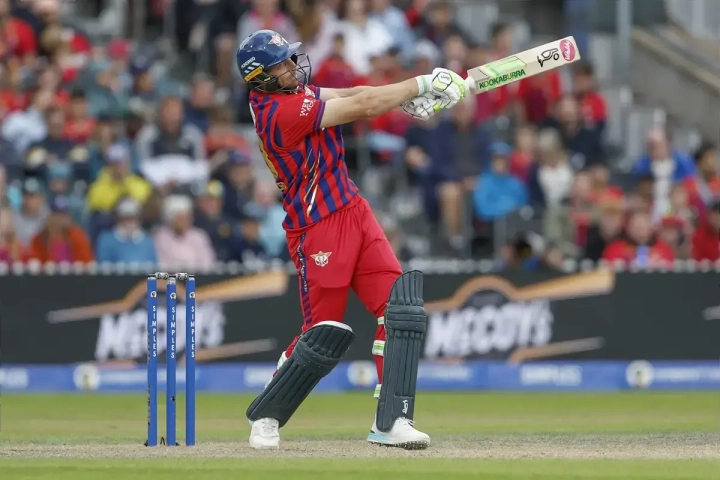
At Emirates Old Trafford, the Men’s Competition of The Hundred delivered a batting spectacle on Wednesday, 5 August 2026. Commencing at 15:00 BST, the hosting Manchester Super Giants produced a ruthless run chase to obliterate Welsh Fire by a nine-wicket margin. Chasing 156, the home side dismantled the visiting attack, surging to victory with 31 deliveries remaining. The fixture encapsulated the rapid-fire nature of the 100-ball format, showcasing a clinical bowling fightback followed by breathtaking power-hitting. The dominant result solidified the hosts’ championship credentials, whilst leaving the visitors searching for answers following a severe mid-innings collapse.
The Toss and Strategic Parameters
At the coin toss, Welsh Fire captain Phil Salt called correctly and elected to bat first on a surface promising consistent bounce. Guided by head coach Mike Hussey, the visitors sought to exploit the batting conditions and exert immediate scoreboard pressure. Opposite number Jos Buttler, operating under head coach Justin Langer, accepted the challenge. The Manchester Super Giants captain trusted his bowling attack to restrict the opposition during the 25-ball powerplay, backing his explosive top order to chase the total.
Welsh Fire’s Innings: An Explosive Foundation
Tasked with setting a formidable target, Welsh Fire openers Matthew Short and Salt embarked upon an aggressive burst that unsettled the home seamers. The duo blended strike rotation with boundary-hitting, constructing a magnificent 125-run stand. Short assumed the role of primary aggressor, brutalising anything marginally loose. The Australian compiled a blistering 71 from 47 deliveries, an innings punctuated by eight fours and two sixes. Operating at a 151.06 strike rate, Short forced Buttler to rapidly rotate his bowlers to stem the relentless flow of runs.
At the opposite end, Salt provided an elegant exhibition of sustained aggression. The visiting captain completely nullified the spinners, securing a vital 48 off 37 balls. His knock featured three boundaries and an equal number of maximums. At the 90-second strategic timeout, the visitors appeared in absolute control, perfectly positioned to launch a grandstand finish.
The Super Giants’ Bowling Fightback
However, the inherently unpredictable nature of the 100-ball format quickly manifested following the strategic break. The Super Giants bowling unit executed a suffocating squeeze during this critical phase. Josh Tongue provided the catalyst, deceiving Salt into offering a catch to Leus du Plooy. This crucial breakthrough broke the opening partnership and changed the innings’ complexion.
Following Salt’s departure, Gus Atkinson delivered a masterclass in restrictive fast bowling during the death sets. Adhering to disciplined lines, he dismantled the incoming middle order. Atkinson concluded his 15 balls with match-defining figures of two for 12, operating at an economy of 0.80 runs per ball. He accounted for Jordan Cox (11) and Tom Kohler-Cadmore, who suffered a two-ball duck.
The Run Chase: An Unrelenting Assault
Defending 156 necessitated a flawless start from the Welsh Fire bowling attack. They desperately required early breakthroughs to artificially inflate the required run rate. Unfortunately for Hussey’s side, the Super Giants top order arrived with a highly aggressive script prepared.
The hosts opted for a dynamic opening combination, pairing Tim Seifert with Paul Walter in a tactical promotion. The duo embarked upon a commanding 74-run partnership that broke the back of the chase early on. Walter seized control, producing a ferocious cameo that dismantled the visiting seamers. The left-hander blasted 37 from just 18 deliveries, hitting four boundaries and two sixes.
Buttler and Seifert Complete the Demolition
If the visitors believed Walter’s dismissal would stem the tide, they were mistaken. Captain Jos Buttler strode to the crease and immediately embarked upon an unyielding assault alongside Seifert. Displaying remarkable hand-eye coordination, Buttler dealt almost exclusively in maximums. The wicketkeeper-batter secured a stunning half-century, finishing unbeaten on 51 from just 20 balls.
Throughout the carnage, Seifert played the perfect aggressive anchor role. The New Zealander compiled a flawless 62 not out from 36 balls, featuring ten boundaries.
The Welsh Fire bowlers, including Marco Jansen (0-42 from 15 balls) and Lockie Ferguson (0-37 from 14 deliveries), struggled to contain the onslaught, finding no tactical answers. The Super Giants surged to 161 for one, sealing the nine-wicket victory on the 69th delivery to spark jubilant celebrations in Manchester.
Tournament Implications
The ramifications of this fixture are profound for the broader context of the Men’s Competition. For Justin Langer’s Super Giants squad, this commanding victory serves as a powerful statement of their championship credentials. The massive margin bolsters their net run rate, establishing crucial momentum as they push for outright leadership of the league table. This remains vital, as it guarantees a pathway to automatic qualification for the Final.
Conversely, the heavy nature of this defeat presents a tactical headache for the Welsh Fire leadership group. Having positioned themselves perfectly with a monumental opening partnership, their late inability to capitalise leaves them heavily bruised. Dropping vital points and suffering a severe dent to their net run rate, Salt and Hussey must quickly address their vulnerabilities. With margins for error diminishing rapidly, the franchise requires an immediate response in upcoming fixtures to keep their Eliminator aspirations alive.
Abbreviated Match Scorecard
Welsh Fire Men – 155/4 (100 balls)