
A Historic Night in Guadalupe
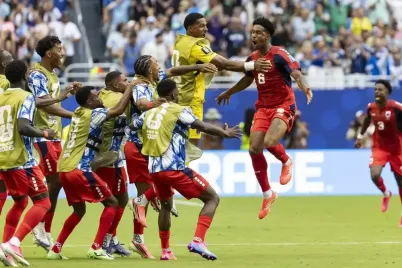
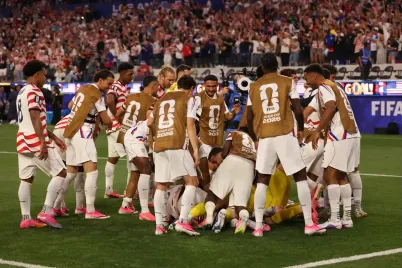
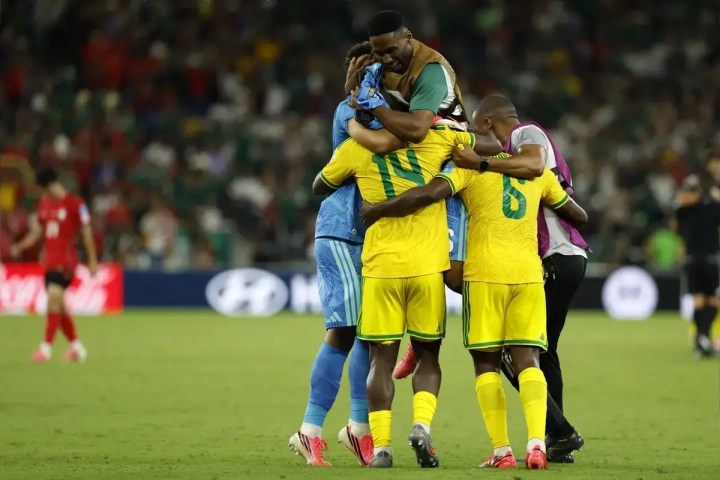
The magnificent architecture of the Monterrey Stadium in Guadalupe, Mexico, served as the dramatic stage for an unforgettable FIFA World Cup 2026 Group A decider. In the early hours of Thursday, 25 June 2026, with kick-off at exactly 02:00 BST, the South African national team secured a monumental 1-0 victory over South Korea. Driven by an unwavering collective spirit and a spectacular second-half strike from Thapelo Maseko, Bafana Bafana achieved something that had eluded them in all their previous World Cup appearances: progression to the knockout stages. The final whistle triggered scenes of pure elation among the African players and coaching staff. Conversely, the heavily favoured Asian representatives were left to rue a disjointed, uninspired performance that leaves their tournament survival hanging precariously in the balance.
The Group A Permutations and Context
Arriving in North America with modest expectations, Hugo Broos’s squad experienced a turbulent start to their campaign. Following a sobering defeat to co-hosts Mexico in their opening fixture, they displayed immense character to grind out a 1-1 draw against Czechia. Heading into this decisive encounter, the mathematical equation was absolutely clear: South Africa needed a victory to extend their World Cup journey.
On the other side, South Korea had commenced their tournament with a hard-fought comeback victory over the Czechs before suffering a deeply frustrating loss to Mexico. Sitting on three points, the Taegeuk Warriors knew a draw would likely be sufficient to advance. However, the resulting 1-0 defeat sees them dramatically slip to third place in Group A with a negative goal difference. They must now endure an agonising wait to discover if their points tally will be enough to qualify as one of the eight best third-placed teams in the newly expanded 48-team format.
Korean Dominance and Early Scares
From the opening exchanges, the stylistic contrast between the two nations was immediately evident. Operating without their talismanic captain Son Heung-min, who was surprisingly benched by manager Hong Myung-bo for the first time in 13 World Cup matches, South Korea sought to monopolise territorial possession. The Asian side dictated the tempo with intricate passing networks, ultimately finishing the match with an overwhelming 68 percent of possession.
The early pressure almost yielded an instant reward. Merely two minutes into the contest, a perfectly delivered corner found the imposing figure of Bayern Munich defender Kim Min-jae at the near post. The centre-back powered a ferocious header towards the net, but South African full-back Aubrey Modiba was perfectly positioned on the goal line to execute a desperate, vital clearance. Shortly afterwards, Paris Saint-Germain midfielder Lee Kang-in found a pocket of space inside the penalty area but lashed his powerful effort narrowly past the right-hand post.
Despite surviving the initial onslaught, Bafana Bafana gradually grew into the contest, relying on their solid defensive block and rapid counter-attacking transitions. Around the 30-minute mark, they manufactured their best opportunity of the first half. Thalente Mbatha unleashed a thunderous long-range strike that forced a spectacular diving parry from Korean goalkeeper Kim Seung-gyu. The rebound fell invitingly to Evidence Makgopa, but the towering forward could only direct his follow-up effort straight into the grateful arms of the veteran shot-stopper. The sides entered the dressing room locked in a tense goalless stalemate, with South Africa quietly confident having weathered the early storm.
Hong’s Half-Time Gamble and Tactical Shifts
Recognising the desperate need for attacking penetration, Hong Myung-bo rolled the tactical dice at the interval. The South Korean manager executed a dramatic triple substitution, transitioning to a traditional back four. The most notable introduction was undoubtedly Son Heung-min, who replaced Wolverhampton Wanderers forward Hwang Hee-chan. The Tottenham Hotspur star was joined by Jens Castrop and Kim Jin-Kyu, replacing Lee Tae-seok and Paik Seung-ho, respectively.
The sweeping alterations were explicitly designed to stretch the South African defensive lines and inject sudden pace into the final third. However, the substitutions failed to deliver the desired impact. Son, enduring a remarkably difficult tournament by his own exceptionally high standards, found himself frequently isolated and suffocated by the rigid African midfield pivot of Yaya Sithole and Thalente Mbatha. Registering only a single touch inside the opposition penalty area throughout his time on the pitch, the 33-year-old forward struggled to replicate the explosive, terrifying runs that have defined his illustrious European club career.
Maseko Delivers the Breakthrough
As the second half progressed, the South Korean possession increasingly resembled harmless, lateral passing rather than incisive attacking intent. Sensing an opportunity to snatch a historic victory, Broos made his first decisive tactical intervention in the 61st minute, introducing Tshepang Moremi in place of Oswin Appollis. The substitution proved to be an absolute masterstroke, directly altering the course of the match just two minutes later.
In the 63rd minute, the substitute Moremi collected the ball on the left flank following a swift counter-attack. Beating his marker with a sudden burst of acceleration, he delivered a precise, low pass across the edge of the penalty area. Thapelo Maseko displayed phenomenal close control to quickly gather the ball in his stride, shifting it onto his favoured left foot. The 22-year-old Mamelodi Sundowns winger then unleashed a clinical, low finish that nutmegged a retreating defender and nestled perfectly into the bottom near corner. The goal sparked scenes of sheer delirium on the South African bench, with Maseko becoming the second-youngest goalscorer for his nation in World Cup history.
Desperate Defending and Final Whistle
Following the goal, the dynamic of the encounter completely shifted. South Africa predictably retreated into a deeper, ultra-conservative defensive block, challenging their opponents to find a route through the heavily congested central channels. The physical intensity escalated, resulting in a yellow card for Modiba in the 72nd minute following a cynical tactical foul to halt a rapid counter-attack.
South Korea desperately pushed bodies forward, introducing powerful striker Cho Gue-sung in the 73rd minute in a final attempt to salvage a crucial point. Despite their overwhelming territorial dominance, the Taegeuk Warriors severely lacked urgency and creative spark. Their passing remained laboured, completely failing to penetrate the resolute South African defensive line commanded superbly by Ime Okon and Mbekezeli Mbokazi. Cho Gue-sung’s frustration ultimately boiled over, earning him a caution just five minutes after entering the fray.
Broos expertly managed the closing stages, utilising Iqraam Rayners and Jayden Adams from the bench to completely disrupt the rhythm of the game and drain the remaining minutes from the clock. When the final whistle eventually echoed across the stadium, the monumental scale of the achievement was apparent. After three previous failed attempts in 1998, 2002, and as hosts in 2010, South Africa had finally broken their group-stage curse.
Tournament Implications and The Road Ahead
Statistically, the match was a fascinating anomaly. While South Korea dominated 68 percent of the possession, it was South Africa who registered a higher number of shots and a superior expected goals (xG) tally, perfectly executing their pragmatic, counter-attacking blueprint. Thapelo Maseko was universally praised and rightfully awarded the Player of the Match accolade for his constant attacking threat and historic decisive strike.
The victory ensures South Africa finish second in Group A with four points. They will now embark on a highly anticipated journey to Los Angeles, California, to face the runner-up of Group B, tournament co-hosts Canada, in the Round of 32 on 28 June. Broos has miraculously cultivated an unbreakable team spirit, transforming a squad that suffered a disastrous opening-day defeat into genuine knockout contenders.
For South Korea, the post-match atmosphere will be filled with profound disappointment and intense introspection. Hong Myung-bo’s decision to initially bench Son Heung-min will inevitably attract severe media scrutiny back home in Seoul. They remain stranded on three points, anxiously waiting for the conclusion of the other group-stage fixtures to determine their ultimate fate. The Taegeuk Warriors must hope their narrow defeat and neutral goal difference will be sufficient to secure a backdoor entry into the knockout phases, but their destiny is now entirely out of their hands.
Official Match Facts
Competition: FIFA World Cup 2026 – Group A Date: 25 June 2026 Venue: Monterrey Stadium, Guadalupe Final Score: South Africa 1 – 0 South Korea
Goalscorers:
- South Africa: Thapelo Maseko (63′)
- South Korea: None
Discipline:
- South Africa: Aubrey Modiba (Yellow Card, 72′)
- South Korea: Cho Gue-sung (Yellow Card, 78′)