
Q: Jersey Boys is coming to Wales Millennium Centre this summer. You’ve performed in Cardiff before. What are your memories of Cardiff and Welsh audiences?
I’ve been very lucky to perform in Cardiff a couple of times during my career, and I have great memories of both experiences.
I first performed at the New Theatre when I played Ren in the UK tour of Footloose, alongside Gareth Gates. That was a brilliant show to bring to Cardiff because it has so much energy, and the audience really embraced it.
More recently, I returned to Cardiff to play Zach Mayo in the UK tour of An Officer and a Gentleman at the Wales Millennium Centre. It is such an impressive venue, both from the outside and when you step onto the stage. There is a real sense of occasion about performing there.
Welsh audiences have always struck me as incredibly warm and generous. There is such a strong culture of music, singing and live performance in Wales, so you feel that connection from the audience. They listen closely to the story, but they also know how to respond when the big musical moments arrive. As a performer, that is exactly the kind of audience you want.
I’m really excited to return with Jersey Boys. It feels like the perfect show for Cardiff because the music is such an important part of the storytelling, and I think Welsh audiences will really connect with that.
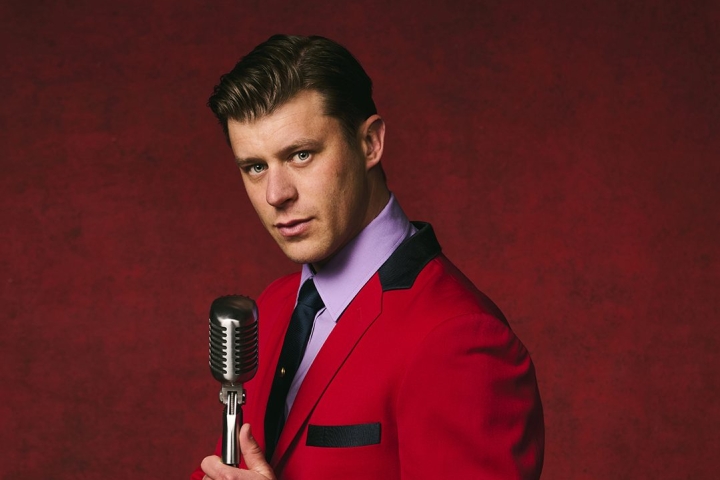
Q: You’re playing Frankie Valli in the 20th anniversary tour of Jersey Boys. What first drew you to wanting to be part of this show?
It is one of those productions I have admired for a very long time. Of course, the music is extraordinary, but what has always stood out to me is how brilliantly the story is told.
People sometimes hear the title Jersey Boys and assume it will simply be a celebration of the music of The Four Seasons. The songs are obviously a huge part of it, but the show is also a gripping drama about four working-class men trying to build something together.
It is about friendship, ambition, loyalty, family, money and the consequences of success. It is funny, moving and surprisingly raw in places. The characters make mistakes, fall out, support each other and experience some enormous highs and lows.
As an actor, that gives you so much to explore. As a singer, you are also getting the opportunity to perform one of the greatest catalogues in popular music. The combination of those two things made the role impossible to resist.
Frankie is also such an iconic figure. The opportunity to play somebody with such a distinctive voice and such an extraordinary life story felt like a challenge I really wanted to take on.
Q: Frankie Valli’s voice is so distinctive. How do you approach finding your version of that voice?
The key for me was never to approach it as an impersonation. Frankie’s voice is instantly recognisable, so there are naturally certain qualities that audiences expect to hear. The falsetto, the phrasing and the placement of the voice are all essential parts of that Four Seasons sound.
However, I also have to tell the story truthfully as an actor. I cannot spend the entire performance thinking only about recreating a recording. The voice has to come from the character, the situation and what Frankie is experiencing at that moment in his life.
I listened to a huge amount of Frankie’s music and studied the details of how he sings. I also worked closely with our musical team to find a version of the sound that honours him while remaining healthy and sustainable for me.
Frankie’s voice developed over many years, and we follow him through a large portion of his life in the show. That means the sound cannot remain completely static. There has to be a sense of the young man discovering his voice, the performer becoming successful and the older Frankie looking back on everything that has happened.
The goal is for the audience to recognise the sound they love, but also to believe in the human being producing it.
Q: What’s been the most surprising part of the role so far, personally and vocally?
Personally, I think the most surprising part has been how emotionally demanding the role is. People naturally focus on the vocal challenge because Frankie’s sound is so famous, but the emotional journey is just as significant.
He experiences extraordinary professional success while dealing with some incredibly difficult things in his personal life. He is often caught between his loyalty to the group, his responsibilities to his family and his determination to keep moving forward.
You have to carry all of that through the performance without allowing the energy of the show to drop. One moment you are performing a huge hit in front of an excited audience, and shortly afterwards you may be dealing with something deeply painful and personal.
Vocally, I was surprised by how much variety there is in the role. People immediately think of the falsetto, but there is much more to Frankie’s voice than the high notes. There is a great deal of control, stamina, storytelling and stylistic detail involved.
I perform the role six times a week, and I am very fortunate to share it with our wonderful alternate Frankie, Ellis Kirk, who performs the other two shows. Having Ellis as part of the company means the role can be shared in a way that protects the voice and ensures audiences receive the strongest possible performance at every show.
It is a demanding role, but it is also enormously rewarding.
Q: You’re a proud Wakefield lad and Frankie is very much a New Jersey boy. Do you see any similarities between your lives?
There are definitely similarities in terms of our backgrounds and our relationship with where we come from.
Wakefield and New Jersey are obviously very different places, but there is a certain directness and working-class pride that I recognise in Frankie’s story. He comes from a community where people are expected to work hard, look after their own and not forget where they came from.
I understand that mentality. Growing up in Wakefield gave me a strong sense of humour, resilience and determination. You learn not to take yourself too seriously, but you also learn to work incredibly hard when an opportunity comes along.
Frankie and the other members of The Four Seasons were not born into the music industry. They had to fight for every opportunity, perform wherever they could and keep going through rejection and setbacks. That is something most performers can relate to.
There is also a loyalty to home that I recognise. No matter where your career takes you, the place you come from remains part of your identity. I’m very proud to be from Wakefield, just as Frankie remained connected to New Jersey throughout his life.
Q: People might think Jersey Boys is simply a jukebox musical, but it’s much deeper than that. Frankie goes through so many highs and lows throughout his life. How do you balance that journey as a performer?
The structure of the show helps enormously because the story is told from four different perspectives. Each member of The Four Seasons takes control of a section of the story, and naturally they do not always agree about what happened or why it happened.
By the time Frankie takes over the narrative, the audience has already formed opinions about him based on what the others have said. My responsibility is not to prove that Frankie is right and everybody else is wrong. It is to show his perspective honestly and allow the audience to make up their own minds.
The biggest challenge is balancing the public success with the private cost. From the outside, Frankie’s life appears extraordinary. He has number one records, international fame and audiences screaming for him. Behind that success, however, there are debts, broken relationships, family difficulties and enormous personal sacrifices.
As a performer, you cannot play every scene with the weight of everything that will eventually happen. Frankie does not know what is coming next. You have to stay present and allow each experience to affect him as it happens.
That is what makes the journey so powerful. The audience sees a young man with an extraordinary voice gradually understand both the rewards and the cost of the life he has chosen.
Q: Do you feel more pressure playing a real-life legend like Frankie Valli than playing a fictional character, such as Zach Mayo in An Officer and a Gentleman?
There is certainly a different kind of responsibility.
When you are playing a fictional character such as Zach Mayo, audiences may already have an image of the character from the film, but you still have a certain amount of freedom to build your own interpretation.
With Frankie, you are portraying a real person whose voice, mannerisms and history are known around the world. Many audience members have followed his career for decades. Some will have seen him perform live, and some may know every detail of the recordings.
You have to respect that knowledge without becoming frightened by it. Trying to recreate another human being perfectly would be impossible, and it would probably prevent you from giving an honest performance.
The responsibility is to do the research, understand the world he came from and honour the qualities that make him recognisable. Once that work has been done, you have to trust yourself and play the scenes truthfully.
In some ways, the pressure is greater because Frankie is a real-life legend. At the same time, the fundamentals remain the same. Whether the character is real or fictional, you have to understand what they want, listen to the people around you and tell the story as honestly as possible.
Q: Looking back at your career so far, what does landing the role of Frankie Valli mean to you personally?
It means a huge amount.
I have been working professionally for many years and have been fortunate to perform in some extraordinary productions. I originated the role of Dean Paxton in Everybody’s Talking About Jamie at Sheffield’s Crucible Theatre and then transferred with the production to the West End, where I played the role for two years.
I have played Tony in Billy Elliot, Ren in Footloose and Zach Mayo in An Officer and a Gentleman. I have performed at the Royal Albert Hall and appeared in the live 40th anniversary episode of EastEnders. Every one of those experiences has taught me something and helped shape the performer I am now.
Frankie feels like a role that brings together everything I have learned throughout my career. It requires acting, singing, stamina, emotional honesty and the confidence to lead a company through a complicated story.
There are some roles that feel like landmarks in your career, and Frankie is certainly one of those for me. I also think it has arrived at the right point in my life. I have more experience now, both professionally and personally, and I understand parts of his journey in a way that I might not have done when I was younger.
Landing the role was incredibly exciting, but performing it in front of audiences and feeling them connect with the story has made it even more meaningful.
Q: What will you take from this experience as Frankie Valli? How has this role enriched your own experience?
The role has reminded me of the importance of discipline and consistency. Frankie is not a part you can approach casually. You have to look after your voice, your body and your concentration throughout the week.
It has also pushed me to trust simplicity. When you are playing somebody with such a recognisable voice, there can be a temptation to demonstrate all the research you have done. However, the most powerful moments often come when you stop trying to show the audience anything and simply allow Frankie to experience what is happening.
The role has also deepened my appreciation for the teamwork involved in theatre. Although Frankie is at the centre of the story, Jersey Boys only works because of the relationship between the four men and the strength of the entire company.
Sharing the role with Ellis has also been a really positive part of the experience. It takes trust, generosity and a shared commitment to the production. We both bring ourselves to the role while serving the same story, and I think that is a very healthy way to approach such a demanding part.
Personally, playing Frankie has made me reflect on ambition and success. The show asks what people are willing to sacrifice for their dreams and whether professional achievement can ever compensate for what is lost along the way. Those are powerful questions for anybody working in a creative industry.
I think I will leave the role as a more disciplined singer, a more confident actor and someone with an even greater appreciation for the people who support you throughout a career.
Q: Wales has such a strong musical tradition. Does it make a difference performing in places where audiences have such a passion for music?
Absolutely. You can feel when an audience has a deep relationship with music.
Welsh audiences are famous for their singing tradition, but it is not simply about technical musical knowledge. There is an emotional openness and a willingness to engage with live performance.
In Jersey Boys, the audience often recognises a song within the first few notes. You can feel the excitement travel through the theatre before anybody has even started singing the first line. That creates a brilliant atmosphere for the performers.
At the same time, audiences who really love music also listen carefully. They appreciate the harmonies, the arrangements and the way the songs develop alongside the story.
The Four Seasons sound depends so much on four voices working together, and I think that will resonate strongly in Wales. There is something incredibly powerful about people singing in harmony, whether that is in a choir, a community or a group like The Four Seasons.
I am very excited to experience that connection with the Cardiff audience.
Q: For anyone in Wales who has never seen Jersey Boys before, why is now the perfect time to experience the show?
This is the 20th anniversary tour, so it is a wonderful opportunity to experience a production that has become one of the most successful musicals in the world.
People should come for the songs they already know, but they should be prepared to discover a story they may know nothing about.
You will hear classics such as Sherry, Big Girls Don’t Cry, Walk Like a Man, December, 1963 (Oh, What a Night) and Can’t Take My Eyes Off You. However, those songs are placed within a story that is funny, dramatic, moving and full of surprises.
It is not a tribute concert and it is not simply a collection of greatest hits. It is a brilliantly constructed piece of theatre about four men who created an extraordinary sound while dealing with friendship, rivalry, debt, family and fame.
The show has huge energy, but it also has real emotional depth. You may arrive knowing every word of the songs, or you may be discovering the music for the first time. Either way, I think you will leave with a completely new understanding of Frankie Valli and The Four Seasons.
Most importantly, it is a fantastic night at the theatre. You will laugh, you may shed a tear, and I can almost guarantee you will still be singing the songs on the way home.
Jersey Boys comes to Wales Millennium Centre 11 – 22 August