A thrilling and innovative new production of The Curious Incident of the Dog in the Night-Time, inspired by Mark Haddon’s multi-million-selling novel, is set to tour the UK. Beginning at Birmingham Rep in September before visiting venues across the country—including the Wales Millennium Centre from 27 April to 1 May 2027—this landmark staging combines a crime mystery with family drama and an insightful portrait of neurodivergence.
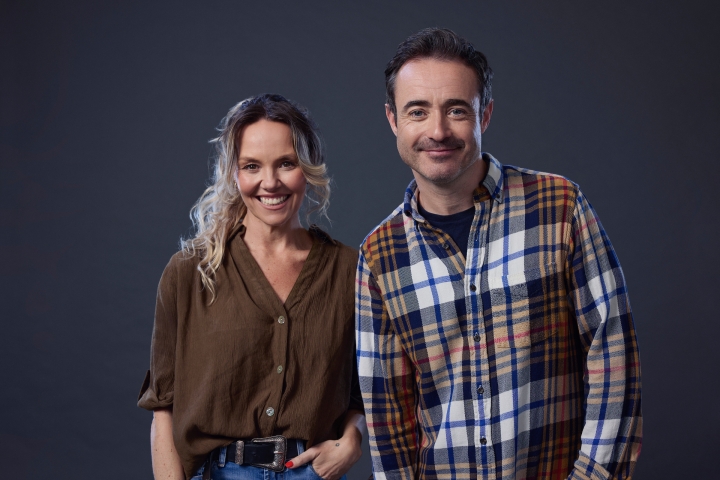
Adapted by Olivier and Tony Award-winning playwright Simon Stephens and helmed by director Ned Bennett, this fresh iteration of the 2012 National Theatre hit introduces a historic first: the female casting of protagonist Chris Boone, played by Alex Keenan in a role alternated with Imi Price. Starring alongside them as Chris’s parents are stage and screen favourites Charlie Brooks (EastEnders, The Ocean at the End of the Lane) as Judy, and Joe McFadden (The Crow Road, 2:22 A Ghost Story, Strictly Come Dancing) as Ed.
Here, Brooks and McFadden discuss reimagining the story for 2026, unpacking the nuances of imperfect parenting, and taking this fresh staging on the road.
When did you each first encounter The Curious Incident of the Dog in the Night-Time?
Joe McFadden: I read the book back in 2003, and like most of the rest of the UK, I loved it. I reread it recently and was blown away again. It gives you such brilliant insight into Christopher’s inner life, his imagination, his world. That’s why it was so groundbreaking: really putting you into the mind of a neurodivergent person and illuminating that experience. I saw it in the West End and thought it was so inventive. Simon Stephens did such a brilliant job of adapting it, keeping the best bits of the book while making sure it came alive as theatre. When I heard they were doing it again with new direction, design, movement, and music, that really excited me.
Charlie Brooks: I read the book a long time ago as well, and then saw the National Theatre production when it transferred to the West End. I thought it was extraordinary. When I heard the play was returning, I was immediately eager to understand the new vision—how they planned to bring the story to life and how it would differ in this staging. Joining the cast was an absolute no-brainer.
How have you approached developing Ed and Judy, and how do you find empathy for two parents who make profound mistakes?
Charlie: Judy is written with so much complexity. She’s flawed, as are many characters within the play, but she is truly doing her best. She finds herself unable to cope with the immense challenges in front of her and feels as though she has very little choice. It’s a heartbreaking question to contemplate: what if leaving is actually what is best for my child? Judy tells herself, “I’m explosive, I’m reactive, I can’t cope”. That must be an excruciating reality to confront, particularly because she loves her child deeply.
Joe: Simon Stephens came into rehearsals during our first week, and my main question for him was exactly that: how do you play these characters sympathetically? They aren’t always fantastic parents, and they make some massive mistakes. Simon simply said, “What parent is perfect all the time?” which resonated with all of us. Ed is up against it. He is a single father working full-time as a plumber to put food on the table, keep a roof over their heads, and raise quite a challenging child alone. You understand his difficulties, and hopefully audiences won’t judge him too harshly. I found myself wondering, “What would I have done in that situation?” There are no easy answers.
Do you feel the play provides room for audiences to understand both perspectives?
Joe: Absolutely. Ed strikes me as a private, serious man. The script notes that he is more patient than Judy; he gets on with things without letting them show. That resilience is a strength, but it’s also his greatest weakness because it stops him from reaching out or communicating. He bottles everything up like a pressure cooker until he blows. That feels like a truthful depiction of a well-meaning parent struggling emotionally. When I first saw the play, the moment he lashes out shocked me, but with age, I have far more understanding of the immense strain he is under to protect a vulnerable child.
Charlie: What is wonderful is that Judy isn’t judged by the play either. The audience is given space to identify with her. She speaks her truth about feeling invisible and out of her depth. We rarely see representations of mothers honestly admitting, “It’s so hard, I want to run away,” yet the production treats her with genuine empathy. Having experienced those overwhelming feelings as a mother myself, I think many women will recognise that struggle.
What can audiences expect from Ned Bennett’s new staging and visual world?
Charlie: During our initial design meeting, I got goosebumps. Set and costume designer Eleanor Bull has created this incredible, textured set using a vibrant colour palette and diverse materials to create a complete sensory experience. When Chris experiences sensory overstimulation, Ned visualises that in an innovative way using dynamic physical movement and props. It’s an exceptionally collaborative room; Ned curates games that allow us to devise ideas together. We’re also actively working to ensure the staging is accessible for neurodivergent audience members while maintaining its dramatic punch.
Joe: It is remarkably inventive. Ned is introducing fascinating theatrical devices, and movement director Jenni Jackson has crafted a physical language unlike anything I’ve worked with before. It really is a sensory feast. A major structural shift in our version is that the audience understands right from the start that they are watching a play-within-a-play based on Chris’s notebook, exposing the mechanics of theatre in a very playful, engaging way.
How does reframing Chris as a young woman alter the landscape of the play?
Joe: Historically, fewer stories about neurodivergence have explored the female experience. Girls are often diagnosed much later in life, or missed entirely, because they are adept at masking their symptoms. Placing a young woman at the centre felt vital. Just as neurodivergent teenage boys saw themselves reflected in the original production, teenage girls will now have that exact same opportunity.
Charlie: It gives a completely fresh lens to the narrative, and both Simon Stephens and Mark Haddon have been fully supportive of everything this change introduces. Neurodivergent girls often have a distinct journey because of that masking. Alex and Imi, who alternate playing Chris, bring an extraordinary, infectious energy to the room.
Does that casting shift alter the domestic dynamic between Chris and her parents?
Charlie: It certainly shifts the emotional resonance. A mother leaving her family carries a distinct societal weight compared to a father walking away. Mother-daughter relationships are innately complex—I have a daughter, and I certainly wasn’t a perfect mother! Revealing the unvarnished realities of those relationships rather than presenting an idealised version is far more honest. Ultimately, anyone can relate to the lingering anxiety of feeling inadequate or failing to fit in.
Joe: It undeniably raises the stakes. Ed is now navigating life as a single father to a daughter, which amplifies his protective instincts even further. Judy leaving a young daughter also lands differently. While the core narrative remains intact, that subtle adjustment shifts the family dynamic and provides returning audiences with an entirely revitalised experience.
What makes you both so passionate about taking this production on a nationwide tour?
Charlie: Touring top-tier theatre across the regions is vital. Coming from Barmouth, a small town in North Wales, regional productions were all I had access to as a child, and they shaped me immensely. This is an impactful piece that provokes thought across generations and provides a wonderful catalyst for family conversations.
Joe: Touring informs the show itself; audiences bring completely different energies depending on where you are in the country. Opening in Birmingham will be fantastic because audiences there always embrace a shared experience. It’s a privilege to bring a story that balances humour, warmth, and insight into these beautiful regional venues.
Are there particular stops on the tour schedule that you are personally eager to visit?
Joe: Returning to my hometown of Glasgow to play the Theatre Royal is always special, as is visiting Edinburgh and Aberdeen. I’m also looking forward to stops in Nottingham, Malvern, and Bath, where I had a wonderful experience on my last tour.
Charlie: I have a long list! My grandmother lived in Shrewsbury, and she was the one who first introduced me to theatre by taking me to see Copacabana there, so returning to perform for family will be lovely. Visiting Bath, Newcastle, Liverpool, and Edinburgh will be fantastic as well. Getting to share this show right across the UK is a real gift.
The Curious Incident of the Dog in the Night-Time opens at Birmingham Rep in September before touring nationwide, arriving at Wales Millennium Centre from 27 April to 1 May 2027.